Monday, August 13, 2012

Hashimoto Meets Diet Members, Threat to DPJ, LDP Jumps

A brief memo, before I got to serious work, got a little out of hand, so it’s going to be a long afternoon, and evening…

According to this Yomiuri report, Mayor Hashimoto met with the following five Diet members. I added information on their ages and their votes on the tax and social safety net reform bill.
Yorihisa Matsuno (lower house, DPJ, 51, no) Kenta Matsunami (lower house, LDP, 40, no) Shinji Oguma (upper house, Your Party, 44, no) Takashi Ishizeki (lower house, DPJ, 40, abstain) Hiroshi Ueno (upper house, Your Party, 41, no)
Beyond opposition to the bill, they—like the YP in general—also appear to share Hashimoto’s conservative external policy outlook, making it easier for them to sign on to the Ishin-no-Kai policy agenda. Most important, the presence of two YP members are an indication that the YP is willing to “lend” to Hashimoto the number of Diet members necessary to reach the five-member minimum for registering a candidate simultaneously in the single-seat districts and the proportional blocs. This “zombiehood” insurance means that a) Hashimoto will not have to field two separate slates of candidates and b) it will be much easier for the candidates to make the leap of faith because unsuccessful single-seat bids will have a very good chance of being rewarded anyway with a proportional bloc seat on the crest of Hashimoto’s national momentum. (Hashimotomentum?). YP itself, unable to cash in on the unpopularity of the DPJ and LDP, also stands to gain from the Ishinmania groundswell in its single-seat bids.

Meanwhile, Mayor Hashimoto’s not-quite blessing of Aichi Governor Omura’s adoption of the name “Chukyo Ishin-no-Kai”, which irritated his local ally and rival, Nagoya Mayor Takashi Kawamura, appears to indicate that he has chosen Omura as his Middle Capital partner while quietly writing off Kawamura*. Taken together, Hashimoto appears to be making progress in laying the groundwork for a coordinated campaign by forces in the three major metropolitan centers of Japan.

According to the latest Yomiuri poll (August 11-12), 21%, 16%, and 11% of the responders said that they would vote for the LDP, Osaka Ishin-no-Kai, and the DPJ, respectively. But 26% were undecided. Even election pros would hesitate to make a projection at this point, but with a large number of candidates contesting sigel-seat districts nationwide, it looks quite plausible that the prospective Ishin-no-Kai-Your Party will deny both the DPJ and LDP an outright lower house majority, with the most likely outcome a Tall Coalition**
. * This impression is reinforced by this report on a meeting between Omura and Osaka Governor Matsui, who is essentially Hashimoto’s political deputy. This makes sense, since Kawamura comes across to me as essentially an old-school politician who caught lightening in a bottle and gained a second political wind when he grabbed the Nagoya mayor’s office, more likely to be a drag on Hashimoto’s radical reformist appeal. In fact, I see him as more likely to caucus with the likes of Ozawa’s minions.

** It certainly won’t be “Small,” but it won’t quite be “Grande” either.

Sunday, August 12, 2012

Things People Don’t Talk about (4): The Difference between Manga and Comic Books

I noticed during my Sunday lunch break that there was no “Things People Don’t Talk about (4)” on my blog. Rummaging through my files, I found the following brief commentary, which I now haven’t the faintest idea whether I’d intended to edit it further, post it as is but just forgotten about it, or deep-six it. The last may be the prudent thing to do, but why waste the time that I invested in doodling about manga and comic books?
. Okay, maybe some people do, but I looked at the Wikipedia entry for “manga” and it says that a “manga artist (mangaka in Japanese) typically works with a few assistants in a small studio and is associated with a creative editor from a commercial publishing company” and leaves it at that, and that’s good enough for me.

The names of Jerry Siegel and Joe Shuster are familiar to even fairly casual observers of the comics scene as the creators of Superman, partly because of the purely iconic nature of the superhero of superheroes but largely, I suspect, because of the long and acrimonious on-and-off-again battle in and out of the courts with the pair and their heirs. And even more people know the name Jack Kirby because, well, because he essentially spawned the Marvel-verse, though Stan Lee made most of the money. Multiple writers, multiple artists, all ultimately interchangeable, multiple storylines, continually feeding off each other, that’s what mainstream US comics are all about. By contrast, Dragonball is Akira Toriyama, even if he let the franchise continue after he stopped writing it for Shonen Jump. And JoJo’s Strange Adventures is Hirohiko Araki’s one-man franchise that’s still going strong after 25 years. In fact, every character and narrative in Japanese manga [usually] lives and dies with the singular artist. Yes, there are professional manga storywriters, some of them highly successful, collaborating with the artists, but even there, the characters that they create are indelibly identified with their creators and are rarely allowed to continue their fictional existence under the imaginations of other artists. Osamu Tezuka’s Atom Boy was revived recently by another artist, but it was a related but separate work, almost an homage to the creator, really. People who like cultural explanations may see the shadows of Henry Ford and Frederick Winslow Taylor in the US approach while conjuring the image of the singular Japanese artisan or samurai immersed in the perfection of his art. But nothing could be so wrong. And I could easily prove that—or at least make a good demonstration to that effect, since cultural explanation can’t even be wrong, to paraphrase one of my favorite sayings.

Saturday, August 11, 2012

As Defense Minister Morimoto Goes…

Just a tentative attempt at making sense of where we’re at, and where we’re going.

As Defense Minister Satoshi Morimoto goes, so goes the generation that remembers the war, and the peculiar external outlook that it carried. The latest outcry over his comments on South Korean President Lee Myung-bak is another sign of their passing.

Defense Minister Morimoto is being subjected to harsh criticism—deservedly so in my view, but that’s a subject for another occasion—over his comment on South Korean President Lee Myung-bak’s visit to Takeshima (Dokto to any Koreans reading this). Specifically, Morimoto stated that “it is a matter that is based on the exigencies of South Korea’s domestic politics. Other countries should refrain from commenting this way and that way on the domestic politics of another country.” Now you may think that this is a pretty nutty thing for a defense mister to say about a contested piece of territory with deep symbolic meaning in the bilateral relationship. And it is. But you have to cut him some slack; he’s 71 years old. And no, it’s not about what you think.

Satoshi Morimoto, born in Tokyo 71 years ago and growing up in the Osaka suburbs, experienced firsthand from his earliest years through his childhood and youth WW II and its aftermath, and post-war reconstruction. As such, he could not have been immune to the sense of personal guilt and shared victimhood that his teachers and, later, many members of the newly ascendant elite genuinely felt towards Japan’s neighbors. Such sentiments all but guaranteed that whenever sentiments flared up, over a new incident, real or imagined almost exclusively on the other side, the instinctive response on the Japanese side was quell the anger and, if necessary,to acquiesce.

The same background must have been at work when 73 year old Uichiro Niwa, the Japanese Ambassador to China, gave an interview to FT reporter Mure Dickie and came out strongly against Tokyo Governor Shintaro Ishihara’s plans to purchase the Senkaku Islands from their private owner, fearing that “decades of past effort [would] be brought to nothing” (“Tokyo warned over plans to buy islands”, FT, June 6, 2012). Niwa may have survived the resultant uproar only because he was deeply embedded in the economic and political establishment in the LDP regime as a go-to guy on economic policymaking.

Against leaders who broadly shared this background, it was easier, relatively speaking, for players on the other side to move the markers on the ground, at sea, and the language and rhetoric with minimal resistance. That Japan had the decidedly stronger economy and enjoyed more prestige, at least within the developed world, for most of this process, like made the concessions easier for the Japanese side.

But this generation is passing—Morimoto and Niwa, at the forefront of the action, are exceptions—and many people have remarked on how the younger generation are decidedly more assertive, more desirous of normal nationhood, than their elders. The Japanese establishment and general public are feeling increasingly distressed with regard to national security and the economy in connection with their neighbors, even as the guilt- and victimhood-laden past increasingly becomes an impersonal relic of “history.” What made practical and emotional sense then, is making increasingly less sense now. Expect the Japanese side, then, to become more assertive, and the political tensions to rise over the coming years, even as the economic relationships broaden and deepen. Even now, we are seeing this in Foreign Minister Gemba’s revival of the Japanese referral of the case to the Hague.

Friday, August 10, 2012

Handball? No Complaints from Nadeshiko

Missed calls are not a rarity, but few have larger potential consequences than the missed handball call that would have given the Nadeshiko a penalty kick in the gold medal final that they eventually lost to the US 2-1. It was a clear foul according to Grant Wahl the American soccer journalist at Sports Illustrated, as well as other US media reports, so it’s not something that happened only in the eyes of the diehard Japanese fan. But none of the annoying histrionics particularly rampant in the men’s game; just play on, as Wahl notes. After the game, it was more of the same. The players, the head coach, no one, not a single quote on the matter from the Nadeshiko side as far as I could gather.

Now, imagine what the aftermath would be like if something remotely similar happens in the Japan-South Korea men’s bronze medal match. And believe me, there will be a lot of fouls to be called or imagined.

Add: Here, Rapinoe comes closest to a concession since Maradonna’s “God’s Hand” statement in the following excerpt: “‘The one on Tobin?’ Rapinoe said, smiling. ‘Thank God I'm not a referee.’" My point, of course, is not that the foul should have been called (though I suppose it should have in the best of worlds) but that no one complained from the Japanese side.

So I Guess My Question Is: Will the DPJ Take an Ozawa Friend Down for Embezzlement/Theft?

I’ll just translate the Sankei article for you; it’s quicker that way.
DPJ Iwate Chapter Funds “Transferred without Permission” to Accounts Held by “People’s Life First” [Representative and Assemblyman]

It became known on the August 10 that 45 million yen managed by the DPJ Iwate Chapter had been transferred to the political funds management organizations of a lower house member and prefectural assemblyman who had left the party and joined the new party People’s Life First.

Kokan Wtanabe, the Acting Representative of the DPJ Prefectural Chapter, held a press conference the same day and sought the return [of the funds, stating], “It has not followed official procedures and is inappropriate. Distribution of assets to collective defectors is impossible.”

According to Mr. Watanabe, on July 3, the day after Ichiro Ozawa, “Life” Representative submitted his notice of withdrawal to the DPJ, 45 million yen, representing most of the money that the prefectural chapter had been managing, was transferred from the prefectural chapter’s account to the funds management organizations of the representative, elected from the Tohoku Proportional Bloc and the prefectural assemblyman.

[According to Mr. Watanabe, t]he representative and assemblyman explained to the prefectural chapter that “political fund raising parties and funds from the old Liberal Party are also sources for the funds.” A document reached Mr. Watanabe on July 9 stating that “the money is being held temporarily and will be deposited in the Life’s account.”
This is wrong in so many ways I don’t know where to start (I gave you the translation partly so you could figure them out yourself); suffice to say that this is a clear-cut case of criminal embezzlement or theft. However, I suspect that the 78 year old Chouemon Kikuchi*, whom Mr. Watanabe apparently refused to name and the reporters on the local beat meekly agreed to equip with the cloak of anonymity, and more broadly Ichiro Ozawa have enough residual political capital vis-à-vis the DPJ loyalists—this is Iwate—to work out a mutually acceptable settlement. With that, I guess I’ve answered my own question.

* The identity of the culprit is so easy to figure out that I can put it out here without any fear of committing any civil or criminal act of defamation.

Things People Don’t Talk about (5) - How the Media Reported on the Seven LDP No-confidence Vote Dissenters

Seven LDP members, defying the party leadership’s decision to abstain, voted for the non-confidence motion in the lower house against the Noda Cabinet. The most remarkable thing about the media report was the way that it put the spotlight on Shinjiro Koizumi, the 31 year old first-term member who inherited his seat from his father, former Prime Minister Koizumi. The Asahi headline reads “Seven LDP members, Mr. Shinjiro Koizumi and Others, Rebel; Search for Rival Candidate [against Tanigaki]?” The article itself more or less repeats this rendering, then adds in the subsequent paragraph that “those voting against it were, other than Mr. Koizumi, former Secretary-General Hidenao Nakagawa; Yoshihide Suga, former Minister of Internal Affairs and Communication; former Yasuhisa Shiozaki, former Chief Cabinet Secretary; Katsuyuki Kawai, former Senior Parliamentary Vice-Minister of Justice; and Masahiko Shibayama and Kenta Matsunami, members of the House of Representatives.” Mainichi reports that “Former Secretary-General Hidenao Nakagawa, who is reluctant with regard to a consumption tax hike, and Mr. Shinjiro Koizumi, who had argued for a hard line, and other LDP members, seven in all, cast votes in favor in the plenary.” The Yomiuri headlines “Seven LDP Members, Mr. Shinjiro[!] and Others, ‘Rebel’…Cabinet No-Confidence Motion Defeated” and goes on to report that “Seven LDP members, Former Secretary-General Hidenao Nakagawa and head of the Youth Department Shinjiro Koizumi and others, cast votes in favor.” Finally, Sankei gives no names in the headline but provides a text similar to Yomiuri’s.

Note that the reports take pains to follow an unwritten protocol in determining the order of appearance when the names of two or more LDP members are given in sequence. And yes, the hardcopy Yomiuri for one does not carry that online report and makes no effort to highlight Koizumi. Moreover, there’s a good chance that Koizumi and Nakagawa happened to be the ones who held the post-vote press briefing on behalf of the seven and, less plausibly, the Yomiuri reporter (or the editor back in Yomiuri headquarters) was the only person to seek the names of the five others.

But if so, the assumption that the seven allowed Koizumi, together with his father’s former second-in-command, to make the announcement and the consequent fact that the Asahi, Mainichi, and Sankei did not bother to ask are telling. As far as the media are concerned, Mr. Shinjiro Koizumi is the Chosen One. And the LDP, from the elders down to his first-term cohorts, will not be complaining, not when the media have his back and a snap election is looming. Unlike the case of the DPJ holdouts, all will be soon forgiven, if not ignored altogether.

Do you know who Koizumi Junior reminds me of? Ronald Reagan. Koizumi has the same calm and easy stage presence and delivery that masked Reagan’s killer instincts and enabled him to maintain a benign aura even when he launched savage attacks against opponents, “welfare queens,” and other Republican targets.

Thursday, August 09, 2012

You Mean, What Do Chiaki Kuriyama and I Have in Common?

What, indeed. I thought you’d never ask.

This is what Chiaki Kuriyama (for those of you who do not recall that name, she played Go Go Yubari in Kill Bill Volume One) looks like and this is what I look like. But beauty is only skin deep. I’ll let her tell it in her own words, right here:

“I’m lazy, I’m not good at sports, and I like to eat when I want, and drink when I want.” She enjoys shochu, the Japanese vodka, while watching the Olympics on TV, and says, “Every day, I look forward to the night.”

Hmm, maybe I should give Chiaki a call…

And speaking of alcohol, good friend Mark Brown has been doing a lot of field work on that subject and has dug up this story about a retired chemical engineer. Turns out, Chiaki and I were both doing the early retirement thing without knowing.

“Hey, Chiaki, there’s this nice beachfront place in Miami…”
THWHAAAAKKKKKK!

Making Omelets and a “Grand” Coalition

As I told Jan Moren in the comments here, a "grand" coalition sounds about as palatable as breaking two eggs to make an omelet—from the egg shells. But from their perspective, it should beat trying to form a bicameral majority from a motley crew of Komeito, Ozawa’s minions, the Hashimoto Ishin allies, Your party, and what else; or, worse, try to govern without a majority in either house.

The equation changes, though, if either party wins an outright majority in the snap election, since that would give the outright winner a much stronger hand in negotiating a manageable coalition without the other. And the idea that neither party will win a majority* is largely predicated on the notion that Mayor Hashimoto’s Ishin-noKai and its allies will win a significant number of seats. But Hashimoto doesn’t have the candidates yet, who will have to run on their own dime. That’s another good reason for the LDP to push for an early election. In fact, if it were just a matter of reelecting as many incumbents as possible (and not minimizing the eventual gap with the LDP), I’m not sure that the DPJ as a whole is better off playing the waiting game. Of course for a first-term DPJ Diet member, another year in hand is worth much more than slightly improved prospects of remaining in office for four more (minus the one).

* I suspect that the conventional wisdom that gives the LDP 200-220 seats and the DPJ 100 (110?) in a snap election has a single source: a recent LDP, district-by-district survey. Political insiders, journalists, and other members of the opinion-forming classes live much in an echo chamber for matters that they do not have immediately familiarity with. This type of conventional wisdom, on its own, is “brittle” in my book.

Wednesday, August 08, 2012

The Tax and Social Safety Net Reform Bill: Sooner, Rather Than Later

It looks like Noda and Tanigaki, with Yamguchi (the Komeito guy) as chaperone, kissed and made up well before 9 PM so that they could go home, grab a beer, and watch Kaoru Icho begin her quest for a third straight women’s wrestling gold medal. (Japanese women’s wrestling is what Japanese men’s judo used to be, it appears.) The deal is to

a) pass the tax and social safety net reform bill expeditiously and
b) see the people’s confidence soon after.

As a taxpayer, I say, what took you guys so long? As an analyst, I think, I should have stuck with my first call instead of getting caught up in the volatility. Oh well, no big deal, it’s only about the timing here. And it’s still the deficit bond authorization bill providing the LDP and Komeito with crucial leverage.

Here’s “Ripe Old Age Guy” on the Political Situation…

From yesterday morning, my fifteen five minutes of fame. I’m not giving you my age, but you can see for yourself how ripe I am.

If you can’t bear to watch the video, I make the point that the tax hike and a snap election would be upon us at most within a few months. (As of this moment, it’s looking more likely that the tax and social safety net reform bill will be passed sooner rather than later, but that’s no big deal.) More important to me, I went out on limb and claimed that there’d be a DPJ-LDP coalition, a coalition that would eventually break down and lead to broader realignment. The nice thing about TV, I’m told, is that no one remembers when you’re wrong, and you are free to toot your horn when you’re right.

We’ll see.

Tuesday, August 07, 2012

People Rooting for Oscar Pistorius Need to Do some Thinking

I’ve been sitting on this for a couple of days, could stand some improvement, but I’m posting it before it goes stale like so many of my thoughts clattering around on my HD.

Controversy has swirled around the question of whether or not prosthetics give double-amputee sprinter Oscar Pistorius an unfair advantage over his able-bodied competitors. If by unfair advantage they mean that he would been slower if he had been born with two normal legs—he was born with no fibulae, which necessitated the amputation when he was a baby—there’s no way of knowing, since what his legs would have been like had they been normal can only be approximate by extrapolation from the rest of his skeletal and muscular makeup. You could test a similar prosthetic on a pair of identical twins, one of whom has one below-the-knee amputation, to see if the prosthetic results in improved performance. But that only proves that the prosthetic confers no “unfair” to that particular twin. A prosthetic whose performance equals the performance of a calf and foot of a LeBron James is more capable than a calf and foot of a Brian Scalabrine, even though they are roughly the same size and play the same sport professionally. Let’s face it, there’s really no way that you can determine what’s “fair” and “unfair.” If you could somehow agree on some fixed formula for strength, resilience, shape, length, etc., you’re still stuck with a standardized equipment, much like vaulting poles. In fact, you now have a sport that is more pole vault than high jump, if you see my analogy.

There could well be more ominous consequences. There’s always the chance that a good athlete could find that the specs allow him an extra inch below his knees if he switched to prosthetics and could see that the inch could be the difference between merely making the varsity track team and winning an Olympic gold medal. That is no idle thought in my view. And I don’t have to lean on memories as a small child in Montreal fantasizing about having my left leg amputated—below the knee!—so I could wear skates and play ice hockey*. If there’s any truth to the Goldman Dilemma, you have to think that there must be not-quite world-class athletes who will think, what’s a couple of legs compared to giving up all but the next five years of the rest of your life, no? And if it really comes to that, the legs could probably be freeze-dried, to be reattached after your athletic career is over.

The Pistorius story and his qualification for the London Olimpycs 400-meter sprint semi-finals may be heartwarming—I don’t particularly think so, but maybe that’s just me—but it opens up a line of inquiry on what’s fair and unfair that really has no answer. I made peace with my own limitations a long time ago, and I think that all physically-challenged people as well as the able-bodied not-quite Usain Bolts should do so as well.

* I had read, or possibly conjured an alternate reality—I now know that I sometimes had trouble making a distinction between objective reality and my nocturnal dreams when I was as old as six—that there was a pre-WW II NHL player who had returned to play in the league after an amputation. It’s possible that I somehow dreamed a happier ending to the life of Howie Morenz.

“Beat Them Up,” or “Beat Them to Death”?

The August 07 online Yomiuri has two reports, http://www.yomiuri.co.jp/national/news/20120807-OYT1T01136.htm?from=main7 and http://www.yomiuri.co.jp/national/news/20120807-OYT1T01136.htm?from=main8, posted at the same time with the same headlines and same texts, except for one small detail. I’ll give you my translation of the headline(s), and you’ll get the idea:

“Mayor Hashimoto, “Large Number Bullying Small Number, Should Beat Them [Up][to Death]”

Having been the second-smallest kid for most of my Montreal grade school class years who somehow seemed to get into a fight every other day but managed to survive into adulthood, I think I know what he was suggesting here and what he was really thinking when he said it. That said, it still was a pretty intemperate, and I would have suggested that he stick to his more mayoral message, which happened to be:

“Jurists should put support for students and support for teachers together into firm rules and (establish) a clear policy that bullying is wrong, while following steps. A posture that deals severely when a certain line is crossed is necessary.”

Clear rules and procedures that enable students and teachers to deal with bully effectively, as well as a red line to mete out severe punishment for egregious bullying: Now who can disagree with that? Yet I’m sure that 2 Channel is going to be abuzz with Hashimoto suggesting lynching as a bullying remedy. Two takeaways here:

1) The facts matter.
2) The perception of facts also matter.

Actually, much of my work and my avocation both revolve around these two observations.

Sunday, August 05, 2012

Hashimoto’s Bunraku Argument in a Nutshell

Sorry, I failed to produce a full-fledged tract on Mayor Hashimoto’s take on Bunraku. You’ll have to be satisfied with my following summary of his July 26 tweets, plus a very brief comment.

1. Bunraku is a popular art form. As such, it must reach out to masses.* If the cultural elite disagree, it should not ask for public handouts. Maintaining Intangible Cultural Assets is the national government’s business.

2. The current script for The Sonezaki Shinju, which was Hashimoto’s second Bunraku experience, is actually a 1955 adaptation. Maybe they should try something new that appeals to contemporary tastes or go back to the original.

3. It’s hard for the novice audience member to ignore the dressed-up, in-your-face, head-and-right hand puppeteer. They should do something about that.

I have one criticism that may seem trivial to you, one that Hashimoto actually should accept if I put it to him. Otherwise, I have no objections to his arguments.

Expect Some Smoke, but Not Much Fire, When Legislators Go Back to Work

The hard-copy Yomiuri today essentially claims that an LDP in-house survey showing that it would win 220 seats in a lower house general election, short of the 241 seats necessary for a single party majority but easily trouncing the DPJ, plus anger over Prime Minister Noda’s understandable desire to lay the groundwork to move forward without calling an early snap election has prompted the LDP rank-and-file and local chapters to push the party leaders to demand a promise of an early snap election in exchange for passing the Legislation Bill concerning the Integrated Reform of Social Insurance and Taxation (essentially, the FY2014-2015 consumption tax* hikes, and pushing back the social insurance reform debate another year, not that it really got started in the first place) in the upper house, making it law. The LDP, like the DPJ, certainly does conduct internal seat-by-seat surveys in anticipation of an election and the poll numbers certainly do give credibility to its purported assessment, so let’s take the prospects of a significant plurality as a driver of the LDP near-term behavior as a given. The mention of the local chapters is also meaningful, because they are to the LDP what the Sokagakkai is to Komeito, the local political machines are to the LDP, and its one clear institutional advantage over the DPJ. The local chapters are not to be taken lightly.

However, it’s still unclear what the LDP can do to force an early snap election just now; the consumption tax hikes won’t kick in until April 2014 anyway. Media reports do mention a lower house vote of no-confidence—the doomsday option: if passed, the cabinet must resign or call a snap election—and an upper house censure motion—the chicken race option: if passed, the opposition claims the moral high ground and goes on strike until a) the government accedes to its demands or b) the opposition is forced to go back to legislative work by the media and popular opinion. I’m betting that the LDP leadership will take a prospective offer from the DPJ—fingers crossed—to vote on the reform bill on 10 August (Fri) instead of 20 (but not 8 (Wed), as the LDP is demanding) to refrain from pressing either motions this week, then sit on its hands on every government bill that does not have “humanitarian needs” written all over it until the threat of the government running out of money becomes imminent, at which point Noda has no choice but to call a snap election as quid pro quo for passing the deficit bonds authorization bill. Besides, Komeito is unlikely to go along with either motion until the reform bill is over and done with.

Once the bill is passed, though, the LDP and Komeito will make a move—if they think that it can get either motion passed. For now, seven other opposition parties, who have most of the remainder—68 seats**—between them, have agreed to introduce their own no-confidence motion on 7 August (Tue). This is actually a negative for the LDP (and Komeito). They cannot vote for it, since it is essentially an anti-consumption tax resolution. The seven in turn will take some convincing to allow the LDP and Komeito to take the lead on a subsequent motion. I think that this going to buy some time for the Noda administration. Note that this is not necessarily a good thing for the DPJ. The Noda administration will feel compelled to compromise to keep potential defectors onside, which means that there will be a corresponding deficit in cohesion, coherence, and clarity as far as its policy messages are concerned.

* I’m not naming names, but I’ve been trying, so far without success, to convince my friends and acquaintances at two media groups to stop calling it a “sales tax.” In the outside chance that you’re reading this, guys, once again, the consumption tax is a value-added tax, not a sales tax.

** In case you’re curious: People’s Life First 38 (including one jointly-caucusing independent), Kizuna Party nine (early anti-tax hike defectors from DPJ), Japan Communist Party nine, Social Democratic Party six, Your Party five (center-right neoliberals), New Party Nippon one (social democrats), New Renaissance Party zero (this is not a typo).

Saturday, August 04, 2012

Am I Repeating Myself on the Political Game Going Forward?

My basic outlook on the political scene hasn’t changed much in the last few weeks. If anything, I’m even more convinced that there’s going to be a snap election this autumn. If the latest polls showing the Liberal Democratic Party (LDP) opening a significant lead over the Democratic Party of Japan (DPJ) and the Noda administration reaching a new low don’t convince the LDP and Komeito to put an upper house hold on the deficit bond authorization bill long enough to force the Noda cabinet to capitulate and call a snap election, frankly, I don’t know what will. But do they have the numbers?

The LDP-led upper house caucus has 87 upper house members (82 LDP, 3 New Renaissance Party 3, and 2 independents), its junior coalition partner People’s New Party has 3, and Komeito has 17. That’s 107. They need 14 more there to be able to be sure that they can vote down any bill there. Keep in mind that they need one less if there is one abstention, and need one less for every two abstentions after that. So where will they be coming from?

Your Party (YP) is all but guaranteed to post its 11 votes against the bill. As the only committed small-government, neoliberal party in the Diet, it will be voting its conscience. Just as important, its leadership should be seeing a window of opportunity to reap the broad anti-VAT (consumption tax) sentiment, a window that will narrow significantly when Osaka mayor Toru Hashimoto’s Ishin movement assembles a viable slate of national election candidates. If the YP is treading water now despite the DPJ’s free-fall and the LDP’s lackluster performance, imagine what will happen when it’s sharing the national stage with a similarly small-government, neoliberal party with a charismatic and articulate spokesman—assuming he doesn’t actually make an always-preposterous immediate run for a Diet seat himself—who commands the respect of his kisha club, i.e. the mainstream reporters on the Osaka municipal government beat. It is even more certain that the Japan Communist Party (JCP), six-members strong in the upper house, will also vote against the bill, as they’ve been doing since forever. Besides, the JCP must be calculating that it is better positioned than the fractious Social Democratic Party (SDP), which has lost every election since it dropped every principle that it had stood for just to produce a prime minister in 1994, to capitalize on the protest left-wing vote. And sure enough, it’s arguing against the bill in the lower house, where I’m sure they’ve turned up the thermostat in the interests of energy conservation. (No, the Japanese Diet is not taking a five-week summer recess. So eat your heart out, Paul S----c!) That brings the total to 124, three more than the 121 minimum necessary. Game, set, match.

The DPJ is sure to complain that the LDP and Komeito are playing politics with national finances. Very true, but the same charge could be levied with the same force against the DPJ. With the VAT hike passed and the social safety net debate pushed back another year, the Nuclear Safety Commission up and running (fingers crossed), and the FY2013 budgetary process mostly up ahead, it will look as good as any time to let the voting public pass judgment on the Noda administration. The media, which never saw a general election that they didn’t like, are likely to see it that way, too, and will color their editorials and reports accordingly. A snap election, of course, won’t change the situation in the upper house, which leads to my base-case scenario, which is an LDP-DPJ-Komeito coalition.

My all-I-want-for-Christmas scenario? Major realignment along ideologically more consistent lines, that’s what. But I don’t see how that is going to happen, even after the likely post-election politicking, so that takes the national political class muddling through, all the way out to the 2013 upper house election, when the Ishin movement should be ready to take advantage of the electoral system that allows it to more fully exploit its national appeal.

Friday, August 03, 2012

Things People Don’t Talk about (3): Say What You Will about the North Koreans…

They sure know how to throw a gay-lesbian rave dance!

Addendum: Even better.

…inadvertently deleted…

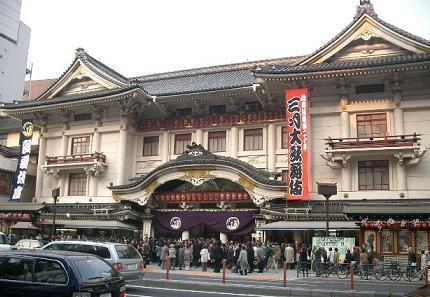
Are You Old Enough to Remember When People Were Leaving Kabuki for Dead?


When I was growing up, kabuki was a dying art. Nobody wanted to see it. Nobody cared. And it seemed only a matter of time before its fan base migrated to the Great Big Kabuki-za in the Sky and kabuki became a historical curiosity, available only through open-reel tape—yes, it was that long ago, boys and girls—and bowdlerized performances for camera-toping tourists. But a funny thing happened on the way to the funeral. Young, charismatic stars appeared, like Ichikawa Somegoro (you know him now as Matsumoto Koshiro) and Bando Tamasaburo (still Bando Tamasaburo), and girls began showing up, and the girls went wild. And traditionalists frowned. Shallow! Uppity! And the new face of kabuki did not limit itself to the kabuki stage. Musicals, Greek tragedy, contemporary drama; you name it, they did it*. Then there was Ichikawa Ennosuke, who, instead of roaming, took the 400-year old art back to its roots and melded it with modern technology, and called the pyrotechnic results super-kabuki.

Those stars are now old and fading, and the new ones don’t quite command our attention like the last generation did. But then, in the age of cable, the internet, and the long tail, who does? And kabuki and its actors wouldn’t even be in the conversation today if they hadn’t moved forward and regained relevance.

There’s an important lesson here for another Intangible Cultural Property (MEXT) and Intangible Cultural Heritage (UNESCO) and I’ll get to that later, perhaps over the weekend. But for now, I’m just happy that the week’s work is done and I still have time to put these thoughts together.

* Many of the top male actors on film and stage in the 1920s-60s had kabuki backgrounds. Names like Arashi Kanjuro, Hasegawa Kazuo, Kataoka Chiezo, Ishikawa Raizo, and Okawa Hashizo readily come to mind. They were the Brad Pitts and Al Pachinos of their era. Willingly or unwillingly, they all left kabuki behind when they pursued their new acting venues.

Wednesday, August 01, 2012

Hashimoto Tweets Narratives, Not Soundbites

As abruptly as he left off tweeting as of July 17 in the wake of revelations about a sexual liaison during his successful career as a lawyer-TV personality, Mayor Toru Hashimoto resumed posting tweets, no explanation given (again), on the 26th. He appears to have returned to his prolific ways as well, with 21 tweets most recently available on the 30th. But if you think he spends an inordinate amount of time on his Twitter account, think again; 20 of those tweets comprise a single narrative. In fact, that’s what Hashimoto mostly uses Twitter for: write a mini-essay or and philippic, which he then uploads in 140 character-and-under chunks. A clever way to get his full story out there. The one other tweet on the 30th is also to the point, sort of, a self-deprecating response to a tweet-shoutout from a well-known neuroscientist and author who had come out in Hashimoto’s support on the Bunraku controversy. (The 20-tweet mini-essay is Hashimoto’s latest salvo on that subject, which at a glance appears to be sharing center stage of late with his battle against the municipal civil service.) He is as much a public intellectual engaged in the new domain as a political revolutionary exploiting the new medium. Keep that in mind when you look at the guy, and his relationship with the media.

I’ll try to find time to put something meaningful together on his Bunraku tweets; in fact, I’d been drafting a post, on and off, on the entire controversy but my work didn’t leave me enough energy to complete it. Now that his latest tweets are out there, I see that he makes all or most of my points, and more, on the substance, though I had also intended to explain why his position should resonate with the general public, as well as intellectuals who were not comfortable with the conventional wisdom and absentminded deference to the “traditional” arts. I’ll try to get back to that; in the meantime, I encourage anyone who reads Japanese to go to Hashimoto’s Twitter account.

Tuesday, July 24, 2012

The Fukushima Reports: Or, Whom Do I Trust?

The Fukushima Nuclear Accident Independent Investigation Commission (NAIIC), the investigation commission set up by the Diet, issued its 600+ page report on the Fukushima Accident on July 5. Yesterday, on July 23, the Investigation Committee on the Accident at the Fukushima Nuclear Power Stations (ICANPS), the government commission, issued its final 800+ page report. Beyond what I am sure are sensible recommendations that the reports offer, there is a lot of attention being paid to the following questions:

1) Did TEPCO management consider the withdrawal of all personnel from Fukushima Daiichi? 2) Did Prime Minister Kan’s interventions hamper the emergency response efforts?

The two questions are related. If the answer to the first question is yes, then Prime Minister Kan arguably saved Japan from an even worse fate by insisting that TEPCO hold its ground. That presumably would make up for any obstacles that Kan’s interventions ostensibly placed in the way of the broader response even the answer to the second questions was yes. I would ask a couple of related but different questions, though.

1) Did all the government figures who interacted with TEPCO management believe that it was considering the withdrawal of all personnel from Fukushima Daiichi? 2) Did Prime Minister Kan’s interventions magnify the scope of the accident or its human toll?

The answer to the first question appears to be an unequivocal yes, in which case Kan did make the right decision, and a potentially game-changing one at that. Besides, TEPCO’s defense turns on the difference between the words 退避, which it claims it used, and 引き揚げ, which it did not. This is a fine distinction to make to say the least—obscure, actually—particularly when TEPCO appears to have failed to mention its alleged intent to leave a skeleton crew behind. As for my second question, I’ve seen nothing so far that indicates that Kan’s interventions, however annoying and potentially dangerous they may have been, actually did serious harm.

My interest lies elsewhere. Specifically, was the reactor significantly damaged by earthquake itself even before the tsunami cut off all emergency power supplies? This, and not Kan’s share of the blame, should be the focus of attention in my view. After all, reviewing the prime minister’s role is but one, relatively small, part of the redesigning that the emergency preparedness and response framework. By contrast, our perception of the cause or causes of the damage to the reactors determines the extent of safety measures necessary to maintain the risk of meltdown within acceptable proportions and indeed whether some reactors can be reactivated at all. The ICANPS report concludes that the earthquake itself did not cause the damage, while the NAIIC report does not discard the possibility.

So who are we to believe? The memberships of the two bodies are remarkably similar, each consisting of scientists and engineers representing the relevant disciplines, one science writer, legal professionals, a retired diplomat, and a Fukushima representative. They each also list a couple of senior technical advisors. But ICANPS goes further and lists eight scientists and engineers in three teams that investigated specific issues in detail, one of which appears to have done the technical work that led to the conclusion that the tsunami was the sole cause of the release of radioactive material including the eventual meltdown. With that, I think that I’ll wait for the jury of their peers, unless someone actually pays me to read the full reports. (And yes, I am aware that there are yet another two. Hmm, I think I’m going to ask B--- G---------. for…)

Monday, July 23, 2012

Things People Don’t Talk about (2): Why Did They Let Hatoyama Get Away with This?

Last Friday, former Prime Minister Yukio Hatoyama, currently under suspension from the DPJ for his lower house vote against the VAT tax hike and other tax and social safety net compromise legislation, joined the ranks of the regular TGIF protest in front of the Prime Minister’s Office complex, picked up a megaphone and told the crowd that he too thought that nuclear power sucks… then apparently went in and gave a piece of his mind to the Chief Cabinet Secretary. Folks, this camel not only peed into the tent, it then walked in, sat down, and dropped a load on the rug.

I’m not really surprised that he did this; he is what he is. I’m also not surprised that the security forces didn’t seize and blindfold him and prop him up against a wall… after all, Japan is a practicing democracy whose citizens have access to due process. I’m also not surprised that the Chief Cabinet Secretary not only let him onto the premises but also let him gave him an earful. And I’m not even surprised that the DPJ made no move to punish this individual for what was at least a violation of the spirit, if not the words, of the terms of his suspension. So perhaps I should not be surprised that the Japanese media did not drop its collective jaw over what happened, or failed to happen, after he exercised his human rights during his suspension from the DPJ. Voting against a DPJ colleague on a non-confidence vote seems to be the only thing that gets you expelled from the DPJ, and the media could care less.